Showing posts with label nebulae. Show all posts

Thursday, January 18, 2018

Messier 78

Messier 78 is a reflection nebula in the Orion constellation. I have always found it a difficult object to image due to its intrinsic visual properties and the sheer bad luck I sometimes have with equipment and weather.

I think that a good, detailed image of this nebula can only be attained using a specialized CCD astroimaging camera, a long focal length scope, and a mount that can perform accurate tracking for long periods of time. I have none of these, but overall I'm fairly pleased with this image.

If you are viewing this on a laptop screen, phone, or tablet, then it is likely that you are going to miss a lot of the details in this image. The main part of the nebula is relatively faint, but the surrounding nebulosity is VERY faint. In fact, it is practically invisible as it absorbs nearly all of the light from the stars in and behind it. Examine the image. Where you don't see stars: that's the nebula. Pretty spooky, huh?

Messier 78
If your monitor brightness is fairly high, then you might see a splash of red on the lower-left corner. That is a portion of Barnard's Loop.

Exposure: 42x120@ISO1600
Telescope: AT72EDII
FF/Reducer:  ATR8 (f/4.8)
Mount: Vixen Super Polaris
Camera: Canon EOS Rebel T3
Processing: Deep Sky Stacker, Photoshop CS6

Sword of Orion, Again

Edit:  I originally posted the wrong image to this article. It was corrected on May 6, 2018.

If you have been following this blog for very long, you probably more than suspect that the Sword of Orion is one of my favorite targets. You would be right! I think it is a beautiful group of nebulae, and it is a fun and challenging object to image and process.

The sky conditions were almost perfect about a week ago, so I decided to try the new AT72EDII on the Sword. The results were superior to my previous attempts. I really like this little scope!

Sword of Orion
Click here for full size.
A 1920x1080 wallpaper version is available here.

Exposure: 23x120+12x60+12x30+8x15+8x4+8x2+1x1+1x0.5@ISO1600
Telescope: AT72EDII
FF/Reducer:  ATR8 (f/4.8)
Mount: Vixen Super Polaris
Camera: Canon EOS Rebel T3
Processing: Deep Sky Stacker, Photoshop CS6

Yes, I really did shoot all of those different exposure times. I was trying to capture the detail all the way down to the Trapezium Cluster. It was only marginally successful. I think I was pushing the limits of the scope, camera, and mount.

Sunday, March 27, 2016

Sword of Orion

Yet another image of the Sword of Orion. I admit that it's one of my favorite targets, however, my primary purpose was to test how the Baader Contrast Booster performed.

The Moon rose around 10:00 PM, so my window was tight. I limited each set of exposures to 8 "good" subs each. The exposure times were 5, 15, 30, 60, and 120 seconds at ISO-3200. Images were stacked in Deep Sky Stacker with darks, flats, and bias frames, and then processed in Photoshop CS6 using the former Google Nik Collection.  (The current version of the Nik Collection can be found at DxO.)

Sword of Orion; ST80 w/Baader CB on Vixen SP; Canon EOS Rebel T3

Close-up of Messier 42 (right), the Great Orion Nebula, and Messier 43 (lower-left), De Mairan's Nebula.

Close-up of Running Man Nebula
The detail on this version isn't quite as sharp as my previous attempt. I think this may have been due in part to the seeing being poor (a front had come through the day before). More 120-second subs would have definitely helped.

The filter performed as expected. There was very little chromatic aberration, and I did nothing to remove what little there was. Note how the stars are not nearly so bloated as in the older image. Keep in mind that these images are from a relatively inexpensive achromat!

The distortion that is particularly noticeable in the stars on the left is due to coma.

Google recently made their Nik filter collection free to the public. There are tons of features and options, and I haven't explored them all. I used the Detail Extractor from the Color Efex Pro 4 collection and Dfine 2 noise reduction filters for these images. I was particularly impressed with the Detail Extractor as it brought out some very faint parts of the nebula in the lower part of the full-size image.

Saturday, August 22, 2015

X Bar Ranch Nature Retreat

My older son and I spent a couple of nights at the X Bar Ranch Nature Retreat near Eldorado, Texas. The ranch features hiking and bike trails, and they have observing fields for amateur astronomers. They also host the annual Eldorado Star Party.

The sky at the X Bar Ranch is rated Class 2 on the Bortle Scale, which is almost as dark as possible. The night sky is amazing!

Below is a panorama of the one of the observing fields, taken from the deck of the Live Oak Lodge. The area is kept mowed, and electrical outlets are located on the back of the lodge and surrounding cabins:


We stayed two nights, but it was only clear on the first night. Seeing was steady above about 20 degrees, with some haze below that. I set up in a small field outside of our cabin and took some pictures of the Milky Way, and the Lagoon and Trifid nebulae. Here is a single 2-minute exposure of the Milky Way taken at ISO-3200 with the Canon EOS Rebel T3 (1100D) mounted on the Vixen Super Polaris:


The very dim illumination of the field at the bottom of the image is from some small, solar-charged walkway lights located behind the camera. The regular observing field is darker.

This is a crop of a stack of 27 2-minute exposures at ISO-3200:


Compare that image to images that I took at the same time two years ago from the SHSU Observatory. While I am pleased with how the older images turned out, they required a great deal more processing to tease the stars out from the light pollution. Most of the time that I spend processing images is usually concerned with removing haze and gradients caused by city lights. More on light pollution later...

One of my goals that night was to make a mosaic of four to six images in the area around the Lagoon and Trifid nebulae. Time was running short, though, and the Trifid was in the haze by the time I got to it. I had to settle for three sets of images. Still, I think it turned out well over all. Here is a mosaic stitched together using Microsoft Image Composite Editor (free software alert!):


Each of the three images is a stack of 12 2-minute exposures at ISO-3200. All were taken with the Canon EOS Rebel T3 (1100D) on the Orion ShortTube 80 with a Baader Contrast Booster filter. The scope was mounted on the Vixen Super Polaris.

I'm really impressed with how well the Baader Contrast Booster works at minimizing chromatic aberration. After using this filter a few times I've concluded that my ShortTube 80 crown/flint achromat is now working about as close to the performance of an ED achromat as it ever will. If only I could find a 1.25" field flattener...

Here are close-ups of the Lagoon and Trifid from the images that compose the mosaic:

Messier 8, The Lagoon Nebula
Messier 20, The Trifid Nebula

The sky here at the ObservaRory is about a 4.5 on the Bortle Scale. The Milky Way is fairly bright overhead, but is lost in the light dome of Huntsville, Texas near the horizon. The difference between the ranch's Class 2 sky and my Class 4.5 sky was immediately apparent, both to the naked eye and through the scopes. Even the polar alignment scope on the mount had a better view at the X Bar Ranch!

To illustrate the difference, compare these two subs taken exactly one month apart. Each image is a 2-minute exposure taken at ISO-3200 with the same equipment under similar weather conditions. No processing has been performed on either image, except to reduce them for display here. (The yellow cast was caused by the Baader Contrast Booster.)

Bortle Class 4.5 Sky at the ObservaRory
Bortle Class 2 Sky at the X Bar Ranch
Besides the darker background, many more stars are visible along with fainter portions of the nebula.

I am definitely spoiled by the sky in West Texas. I plan to make more trips as often as I can.

I hope to visit the X Bar Ranch again, too. The accommodations are comfortable, and the scenery is beautiful. The Meador Family, who own the ranch, are terrific hosts. They've thought of nearly everything and seem very friendly. If you happen to head that way, also check out the Caverns of Sonora:

Lower Room, Caverns of Sonora

Monday, July 20, 2015

Baader Contrast Booster

This post is fairly long, so here are the pictures. I'll meet you on the other side!

Messier 8, the Lagoon Nebula; ST80 w/Baader CB on Vixen SP; Canon EOS Rebel T3; 11x120 @ ISO-3200

Messier 7, Ptolemy's Cluster; ST80 w/Baader CB on Vixen SP; Canon EOS Rebel T3; 32x60 @ ISO-3200

Back in February I purchased two new toys for my ST80/Vixen Super Polaris rig: a Baader Contrast Booster with IR-Cut filter, and an ADM dovetail saddle adapter. Family, clouds, weather, clouds, personal health, clouds, work, clouds and clouds prevented me from doing any astrophotography until mid-July.

The Vixen Super Polaris was the last mount of the Polaris line that was produced without a dovetail saddle. Personal budget limitations have prevented me from upgrading to a modern mount, but ADM Accessories makes an adapter within my price range. The VSAD-SP bolts to the top of the mount head. Two large, spring-loaded screws on the saddle grip the male dovetail bar very securely. Installing and removing the scope is very easy now. In addition, the telescope and camera can be properly balanced on the declination axis, which was impossible before because of the size of the scope and arrangement of the rings.

I'm always trying to find ways to get better images out of sub-par equipment. The ShortTube 80 is a great little scope for casual viewing, but the chromatic aberration inherent to fast achromats makes it unsuitable for imaging. A quality imaging scope is still outside of my price range for the foreseeable future, so I am trying to make the best with what I've got.

My research and experimentation led me to try the Baader Contrast Booster. The Contrast Booster filters out wavelengths on the extreme ends of the visible spectrum that are responsible for much of the blurring and halos caused by chromatic aberration. It also filters out wavelengths produced by common sources of light pollution.

I had the opportunity to try the filter visually against the Great Orion Nebula back in March. The moon was at 68% illumination and the nebula was about 30 degrees above the light-polluted horizon. Despite all of that, I could see a remarkable difference in contrast.

The two images above were made using the Baader Contrast Booster. The chromatic aberration, while not competely removed, was significantly reduced. This was a major improvement over my best results with the Orion SkyGlow Astrophotography Filter and the #15 yellow filter discussed in the Fixing Halos post.

The three following images illustrate the differences among the filters:

Baader Contrast Booster
Orion SkyGlow Astrophotography Filter
Yellow #15
The stars in the Contrast Booster image are larger, but that may be due to the fact that it was shot at ISO-3200 versus ISO-800 for the other two. The important thing to note is that the halos are confined to a tight ring around the stars.

The image of the Lagoon Nebula at the top of the post was processed without attempting to remove the effects of chromatic aberration. I applied the Color Layer technique to the image of Messier 7 to reduce an overall purple hue that was likely the result of all of those bright stars.

I was concerned that the Contrast Booster might cut out too much blue from the images. Pure blue hues are not common in astroimages. The best example that I can think of is Messier 20, the Trifid Nebula. This nebula presents a striking contrast between a red emission region and blue reflection region. The image of M20 below was compiled from only five subs, so it is fairly grainy. However, the blue came through the filter nicely:

Messier 20, the Trifid Nebula; ST80 w/Baader CB on Vixen SP; Canon EOS Rebel T3; 5x120 @ ISO-3200
I plan on doing more tests and reimaging more objects with the Baader Contrast Booster. So far, however, I think this filter brings the ST80 close to the performance of an ED refractor--at least as close as it can reasonably get.

Wednesday, December 31, 2014

New Post, New Year, Another Redo

A few days ago I asked, "What do amateur astronomers do when the weather is lousy?" Today I ask, "What do amateur astronomers do when the weather is lousy, they have a cold, and they can't sleep?" Well, the answer is the same: they reprocess old images! So, I'm ringing in 2015 with a reprocess of images of the Horsehead and Flame Nebulae taken exactly four years ago today.

Flame Nebula (lower left) and Horsehead Nebula; ST80 on Vixen SP; Canon EOS Rebel XS (1000D); 12x180
Happy New Year!

Sunday, December 28, 2014

Reprocessed Images

What do amateur astronomers do when the weather is lousy and they can't get out with their scopes? Well, sometimes they reprocess old data. I have learned a lot about image processing over the few years that I've been in this hobby. Sometimes it is fun to see if I can do a better job using my new skills and tools. Some of these were very challenging as I did not have all of the components necessary for producing clean images (darks, flats, and bias frames).

These are some of the images that I selected as candidates for a slide show that a friend of mine is working on for the Sam Houston State University Planetarium.

Messier 8, the Lagoon Nebula, in the constellation Sagittarius.

Messier 8, the Lagoon Nebula, on the right. Messier 20, the Trifid nebula, in the upper-left. Both nebulae are in Sagittarius. This is a composite of two images taken with my Orion ShortTube 80.
Messier 35, in the upper-left half of the image, and NGC 2158 in the lower-right. Both clusters are in Gemini.

Messier 38, in the right half of the image, and NGC 1907 on the left, in Auriga.

Messier 45, the Pleiades, located in Taurus. This is only a portion of the cluster.

Messier 83, the Southern Pinwheel Galaxy, in the constellation Hydra. It is the southernmost galaxy in the Messier catalog.

Leo Triplet. Also called the M66 group. Messier 65 is on the lower left, Messier 66 is on the middle left. NGC 3628 is located on the right. It is sometimes called the "Hamburger Galaxy."
Messier 37, in the constellation Auriga.

Friday, December 19, 2014

Sword of Orion - Quick Reprocess

Here is a quick reprocess of an older image of the Sword of Orion taken with the Canon EOS Rebel XS on the Takahashi Epsilon 200.  I hope to reimage this object sometime this winter.


Sunday, November 2, 2014

Eastern Veil Revisited

I was telling Clayton, my astronomy pal over at Clayton's Wanderlust for Stardust, about the difficulties that I was having in processing my recent image of the Eastern Veil Nebula. He asked if he could try working with them in PixInsight and Photoshop. The results are amazing!

The colors of the nebula and the stars are more vivid, and the detail is sharper. These images were produced with the same set of data in my previous post!

Wide-angle of the Eastern Veil

Closeup of the nebula (NGC 6992/6995)

Closeup of NGC 6995, showing detail
This has convinced me that there is yet more that I can extract from my modest equipment. I'm looking forward to learning some new image processing techniques!

Sunday, October 26, 2014

NGC 6992/6995, The Eastern Veil Nebula

The Astronomy Bug has been biting me pretty viciously lately. It's been too long since I've been out to the observatory! I try to ease my pain with an occasional imaging session with the ST80 whenever possible. One night in mid-October I managed to get a few minutes to take a few subs of the Eastern Veil Nebula.

The Veil Nebula is a supernova remnant located in the constellation Cygnus. It is a very large object in our skies, spanning an area of about six full moons, but it is not visible to the naked eye. (I have heard that it is barely visible in exceptionally dark skies, though.)

The Eastern Veil is one of the brighter sections. The Western Veil is also relatively bright.

NGC 6992/6995, The Eastern Veil Nebula; ST80 on Vixen SP; Canon EOS Rebel T3; 11x120 @ ISO-3200
For a detailed view of the entire Veil Complex, see Don Taylor's web site.

Friday, August 15, 2014

Butterfly Nebula

This is the Butterfly Nebula (IC 1318) in Cygnus, taken in late July 2014. I used a #15 yellow filter and the processing technique described here. The bright star at the bottom center is Sadr. Open cluster NGC 6910 is located on the lower right.

Butterfly Nebula (IC 1318) in Cygnus; ST80 on Vixen SP; #15 yellow filter; Canon EOS Rebel T3; 25x90 lights @ ISO-3200; 16 darks; 16 flats

Sunday, January 19, 2014

Rising Moon

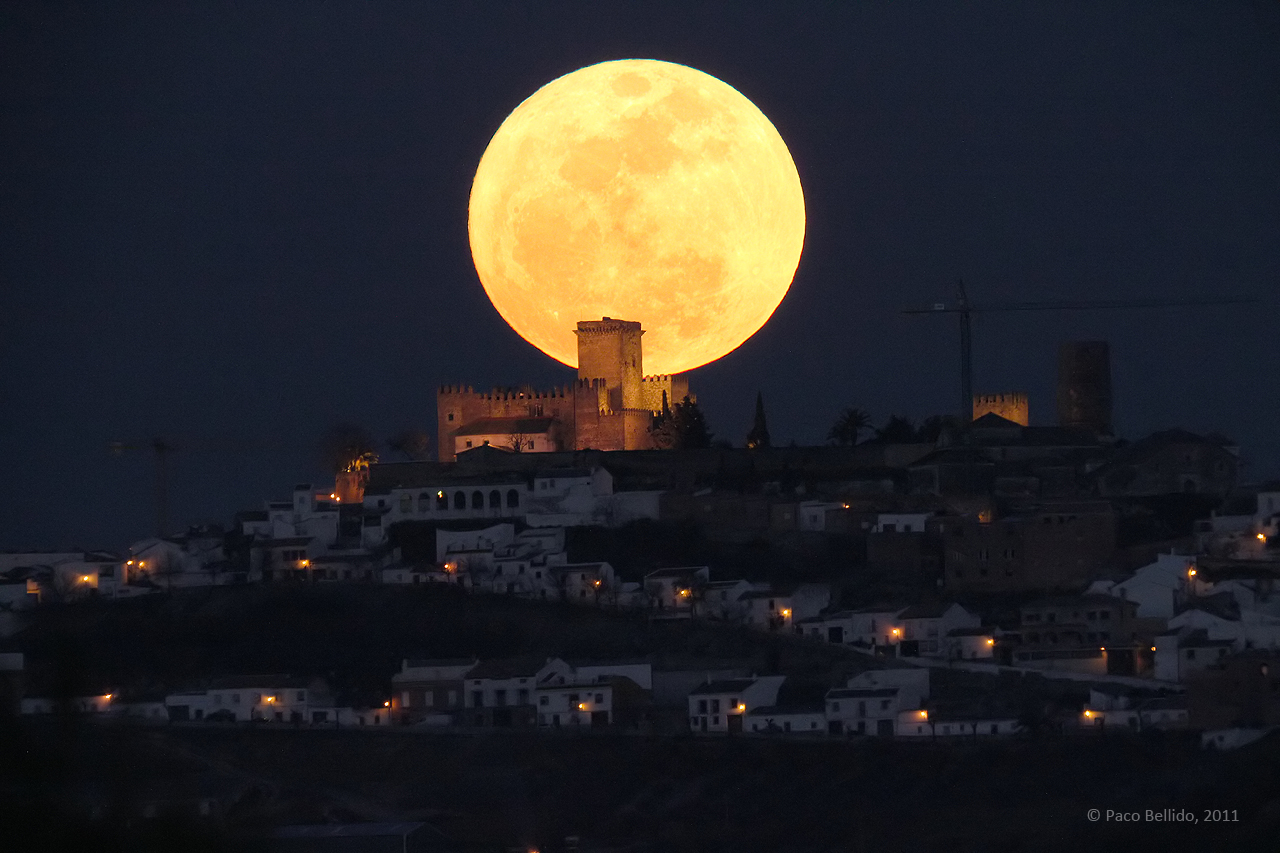
You know those really cool pictures people take of the Moon rising behind interesting objects? I've been wanting to do something like that for a while, so I decided to go out and catch some shots of the rising moon from my front yard. The images are nothing spectacular, but there is something special about the Moon when it's low on the horizon...


I also took some quick shots of the Flame and Horsehead Nebulae in Orion while waiting for the Moon to rise. This image is composed from 7 30-second exposures at ISO-6400, and minimally processed in GIMP.


And before the Moon got too bright, I took a few shots of the Double Cluster in Perseus. This is from 12 30-second exposures at ISO-6400, and minimally processed in GIMP.


Saturday, August 17, 2013

Messier 16

I imaged Messier 16 back in July 2010, but was never satisfied with the results. It was one of my early attempts at imaging with the astrograph and the Canon EOS Rebel XS (1000D).

I've learned a lot about image processing since then and have gained better tools. So, occasionally I like to go back and rework older images to see if I can make them better. I'm satisfied enough with this image to post it, but I would like to go back and reshoot it one day when I get a chance.

Messier 16, also known as the Eagle Nebula, is perhaps most famous for the Hubble Space Telescope image of the Pillars of Creation. The pillars are visible in this image near the center, although they certainly don't look as spectacular here as in the Hubble image!

Messier 16, the Eagle Nebula; Epsilon-200 on NJP mount; 19x120 at ISO-800

Sunday, July 7, 2013

Observatory

The southern sky from my house is dominated by the light dome of Huntsville. One of the nice things about the Sam Houston State University observatory is its relatively dark southern sky; so, when I get a chance to image from the observatory I often image objects to the south.

During a recent visit to the observatory I imaged Messier 22, a globular cluster, and Messier 17, the Swan Nebula. Both objects are located in the constellation Sagittarius.  Both images were made with my ST80 and the Vixen Super Polaris mount.

Messier 22, the Sagittarius Cluster; ST80 on a Vixen SP mount; 17x120
I posted an image of Messier 22 back in August 2010 that was made using the Epsilon-200.

I was trying some experiments with a Barlow lens and apparently knocked the mount out of alignment.  I didn't realize the problem until I started imaging Messier 17. I tried realigning it, but apparently didn't do something right. It was getting late and I was getting tired and making mistakes. However, I did manage to get five decent subs of the nebula.
Messier 17, the Swan Nebula; ST80 on a Vixen SP mount; 5x120
I've imaged Messier 17 before. I will definitely revisit this object when I get a chance.

Sunday, June 2, 2013

Flaming Star Nebula - New Camera

I've held off posting this one for a few months because, frankly, I'm not at all happy with it. This is the Flaming Star Nebula, located in the constellation Auriga.

Flaming Star Nebula; Canon Rebel T3 (1100D), ST80 on Vixen SP mount; 10x120 at ISO-6400
The reason I decided to post it here is to give an example of what a long exposure looks like on my new camera. I've had this camera for a while, but haven't had the opportunity to use it much for astrophotography. It is a Canon EOS Rebel T3 (1100D) that I got for cheap. It's main selling point was its low noise on long exposures. I was never able to separate the Flaming Star Nebula from the ambient noise of the old Rebel XS.

Another advantage of the new camera is that it will take exposures at ISO-3200 and ISO-6400, unlike the old camera that only went up to ISO-1600.

As those of you who keep up with this blog already know, I use an Orion ShortTube 80 on an old Vixen Super Polaris mount when I view and image from home. The Super Polaris is a great little mount, but it does not have autoguiding or any kind of fancy computer control, like GOTO. The polar alignment scope is out of date (it was probably made in the mid-80s), so I have to estimate where to place Polaris in the reticle. As a result, the best I can usually get out of it are 3-minute exposures. Therefore, I figure that the higher ISO and lower noise of the T3 will help me capture more detail.

Here is a portion a single shot from the run that was used to produce the image above. I limited the exposure time to two minutes because the light pollution was swamping the nebula at higher exposures.

Two-minute exposure at ISO-6400. The nebula is barely visible, but can be separated from the relatively even noise.
Here is another example frame. It is a portion of a shot of Messier 101:

Three-minute exposure at ISO-1600 of Messier 101.
I'm looking forward to trying this camera on the astrograph at the observatory.

Monday, December 24, 2012

Nebulae in Orion

My wife surprised me with an early Christmas present: a new lens for the DSLR. It's a 75mm-300mm zoom lens, so basically it is a small telescope in my view. It's not perfectly suited for the task, but that doesn't stop me from trying to use it for imaging. Below is my first attempt at using it for a wide-angle shot:

Nebulae in Orion
This is a composite of several exposures ranging from 10 seconds to two minutes.

The Sword of Orion is prominent in the upper-right. This complex of nebulae is composed of Messier 42, Messier 43, and the Running Man Nebula.

The Horsehead Nebula is located left of center. The horse's head is actually a molecular cloud, or dark nebula, situated in front of an emission nebula from our persepective.

The Flame Nebula, an emission nebula, is located to the left of the Horsehead.

The three bright stars that form a line from the Flame/Horsehead to the upper-left are Alnitak, Alnilam and Mintaka. They form the Belt of Orion.

Reflection nebulae Messier 78 is located in the lower-left of the image. I hope to get some better images of M78 in the near future.

Saturday, November 24, 2012

Wide-Angle Shots

I've been experimenting with taking wide-angle long exposures with the camera mounted on the Vixen SP. Here is an image made in September 2012 of the Milky Way, with the constellation Cygnus on the left, and the constellation Aquila on the right. Prominent features include:

  • The North America Nebula, on the left.
  • The Great Rift (the dark lane that stretches across the middle of the image from left to right).
  • The Cygnus Star Cloud (the bright region just above the middle, from about the center of the image and extending to the left)
This image also encompasses part of the area that is being studied by the Kepler mission.

Note, too, that the Great Rift appears less dark on the right. This is due to light pollution from town.

Milky Way from Cygnus to Aquila; Canon EOS Rebel XS on Vixen SP mount; 15x240; click here for full size
The following was a test image made after focusing the camera on Jupiter during a brief imaging session in early November 2012. Jupiter is the bright star near the center of the image. The reddish star to the upper-right of Jupiter is Aldebaran, in the constellation Taurus. Also visible are star clusters NGC 1746 (which is actually an asterism partially composed of two open clusters), NGC 1647 and the Hyades cluster. The vertical streak is the light trail made by an airplane.

Jupiter; Canon EOS Rebels XS on Vixen SP mount; 1x30
After focusing the camera, I pointed it at Messier 31, the Andromeda Galaxy:

Messier 31, the Andromeda Galaxy; Canon EOS Rebel XS on Vixen SP mount; 6x150
My primary goal was to image the area surrounding the constellation Perseus. My time was running short and Perseus had just cleared the trees, so I pointed the camera in that direction and got enough subs for the image below. Some of the items visible here are the Double Cluster (above and right of center), and the Heart and Soul nebulae (the faint red patches below and left of center):

Perseus Region; Canon EOS Rebel XS on Vixen SP mount; 11x150; click here for full size